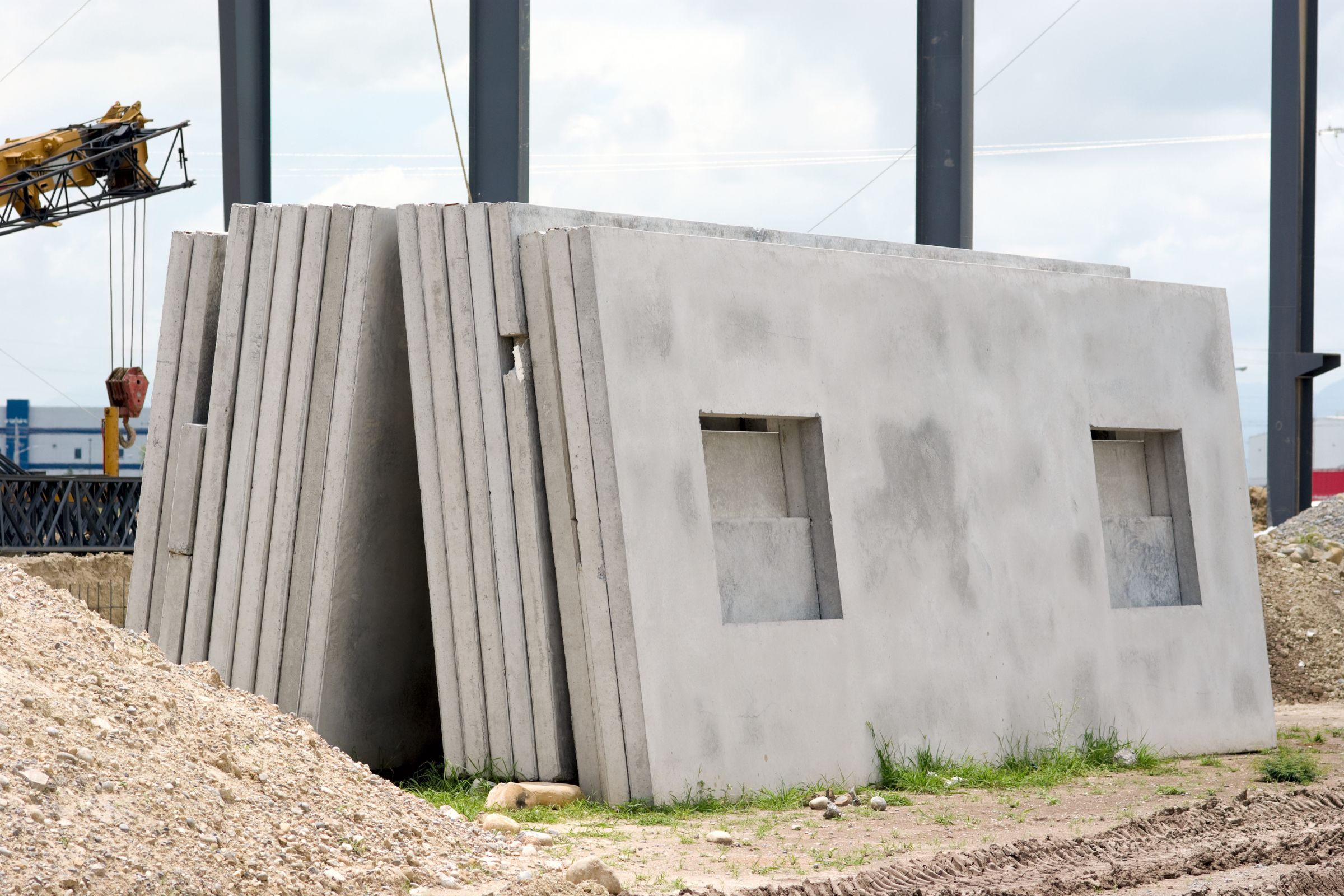
Precast concrete has transformed the way architects, designers, and builders approach modern construction. By moving the fabrication process from the…
Municipal buildings and public spaces require materials that can do more than look good on opening day. From civic centers and public plazas to pedestrian areas and community gathering spaces, these environments experience frequent use, changing weather conditions, and long-term exposure to the elements. At the same time, architects and planners need materials that contribute to the identity and character of the surrounding community.
Precast concrete can address both sides of that equation.
The durability, customization, and versatility of municipal precast concrete make it suitable for everything from building facades and wall panels to benches, planters, coping, and other landscape features. By using concrete across architectural and landscape applications, design teams can also establish a consistent visual language that connects buildings with the public spaces surrounding them.
Why Is Precast Concrete Well Suited to Municipal Projects?
Municipal and civic projects present unique design challenges. Materials may need to withstand continuous pedestrian activity, outdoor exposure, freeze-thaw conditions, moisture, and everyday wear while requiring manageable long-term maintenance.
Precast concrete components are manufactured away from the final installation location under controlled conditions. Instead of forming and casting every element on the job site, components can be fabricated according to predetermined dimensions, colors, textures, and other project specifications.
This approach can provide greater control over the finished product while giving architects substantial design freedom.
For public projects, that combination is especially valuable. Concrete for public spaces can be designed to serve functional needs while simultaneously becoming part of the architecture.
Concreteworks East’s Commercial Concrete capabilities allow custom architectural concrete to be developed for demanding commercial and large-scale environments.
Precast Concrete Wall Panels for Municipal Buildings
The exterior of a municipal building often needs to communicate permanence while remaining welcoming to the public. Libraries, civic centers, administrative buildings, transportation facilities, and other public structures can all benefit from architectural concrete facade systems.
Precast concrete wall panels provide architects with considerable control over the appearance of these buildings. Panels can be developed with different dimensions, colors, surface treatments, and patterns rather than limiting a project to a standardized appearance.
GFRC, or Glass Fiber Reinforced Concrete, can further expand these possibilities. Its relatively thin profile and reduced weight compared with conventional precast systems can make it particularly useful for architectural cladding and decorative applications.
Concreteworks East’s custom Wall Panels can be developed for interior and exterior applications with project-specific colors, dimensions, textures, and finishes.
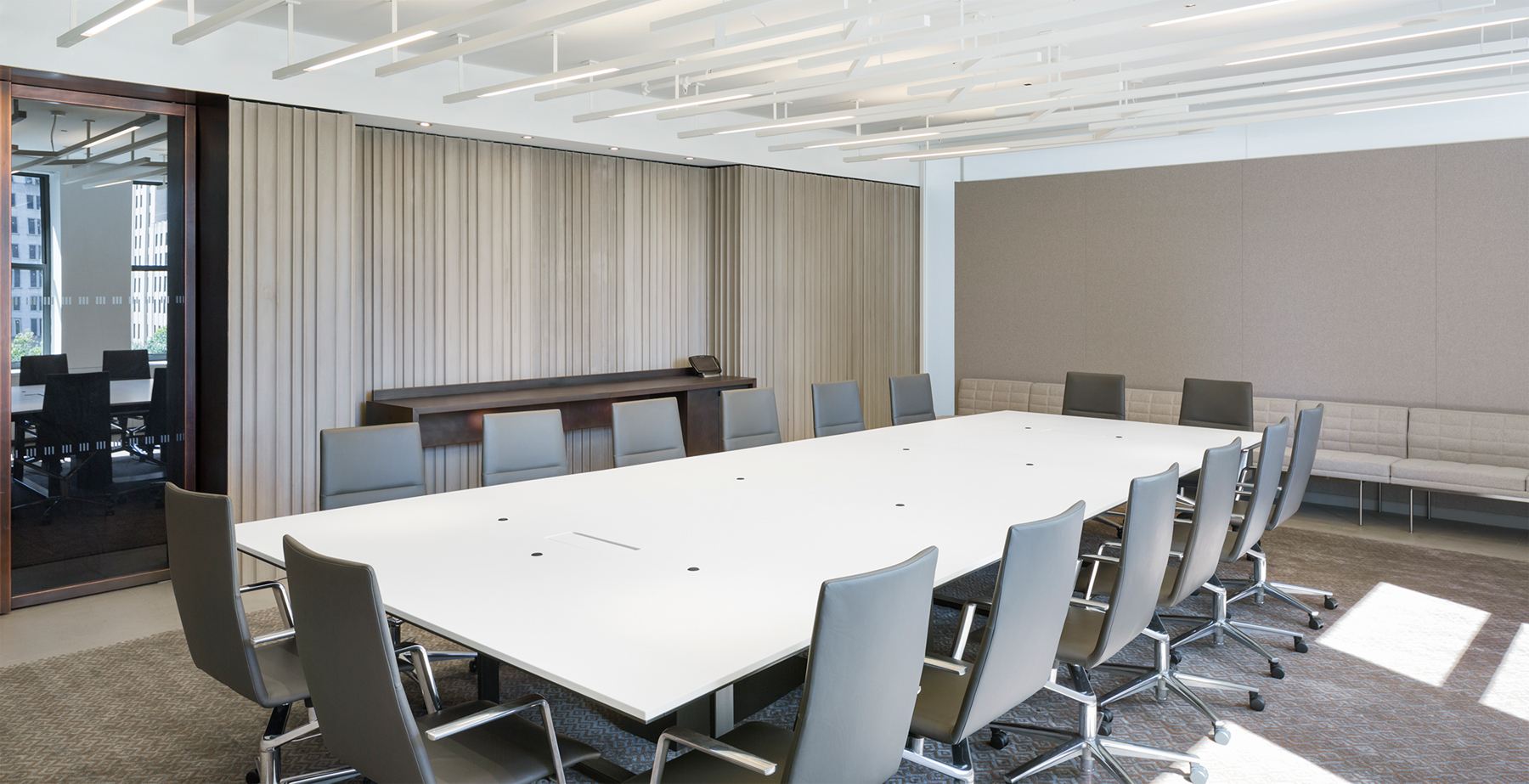
Inside municipal buildings, concrete panels can also become prominent design features in lobbies, corridors, gathering areas, and other public-facing spaces.
Creating More Durable and Inviting Public Plazas
Public plazas must accommodate many different activities. A plaza may serve as a pedestrian corridor during the morning commute, a gathering place during the afternoon, and an event space on evenings or weekends.
The materials within these spaces consequently need to balance durability, functionality, and design.
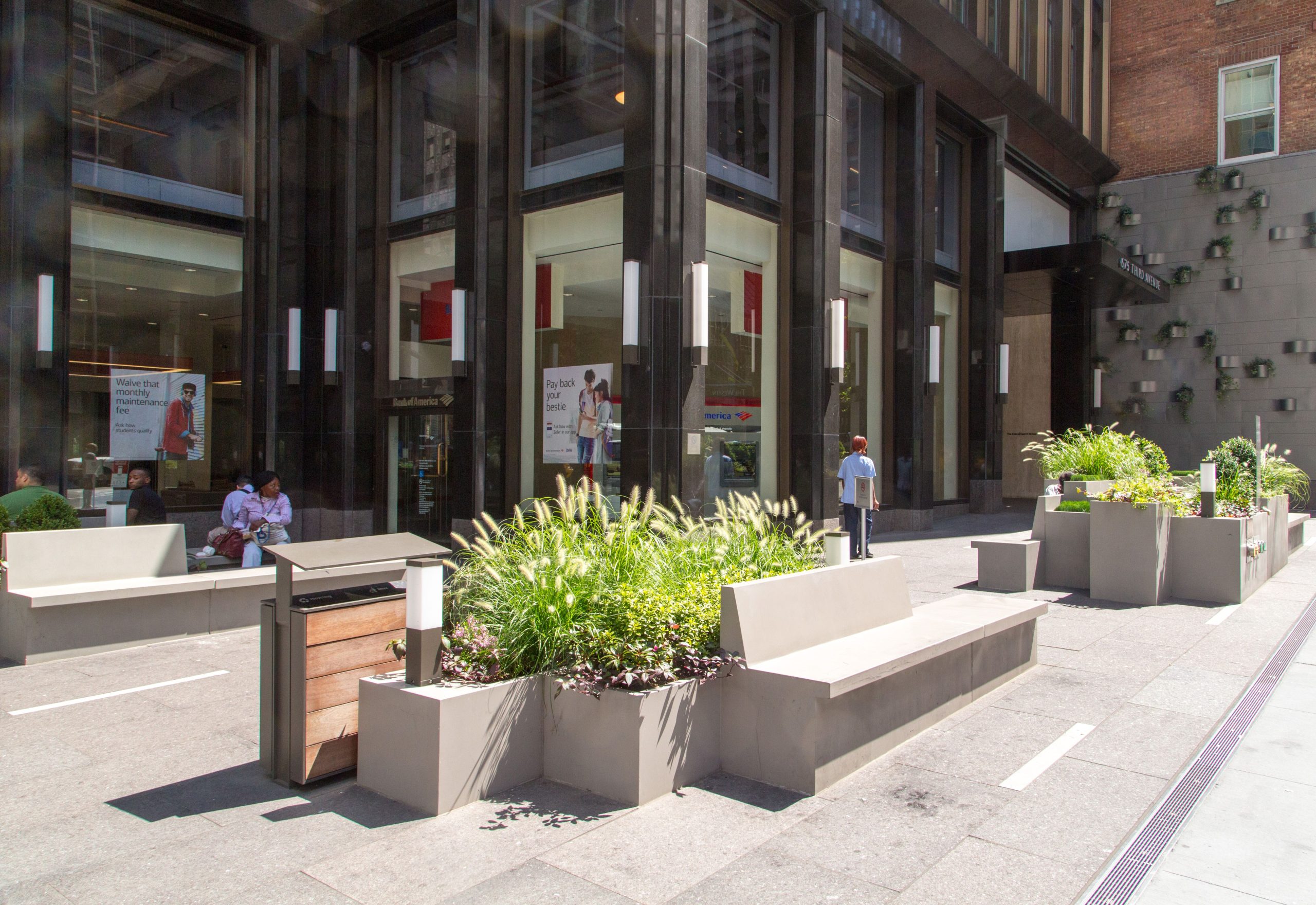
Custom concrete landscape elements can help divide large spaces into more comfortable and useful areas without sacrificing visual continuity. Concrete seating, planters, walls, steps, and other elements can define circulation paths, create gathering areas, introduce greenery, and establish boundaries.
Explore Concreteworks East’s Landscape Concrete capabilities for additional examples of how concrete can be incorporated into exterior environments.
Concrete Benches and Public Seating
Seating is one of the most important elements of a successful public space. It gives pedestrians somewhere to rest and encourages people to spend more time in plazas, parks, transportation areas, and civic environments.
Concrete benches are particularly well suited to these applications because they combine substantial construction with extensive design flexibility.
Rather than relying exclusively on standardized site furniture, custom concrete seating can be fabricated around the architecture of the project. Designers can specify dimensions, profiles, colors, textures, and configurations that complement surrounding walls, paving, planters, and structures.
Seating can also become an architectural feature itself. Curved forms, integrated seating walls, geometric benches, and sculptural elements can contribute to the identity of a public space while remaining functional.
Custom Concrete Planters
Plants can soften large civic spaces and create a stronger connection between architecture and landscape design. Custom concrete planters provide a durable framework for introducing vegetation into plazas, sidewalks, building entrances, courtyards, and pedestrian environments.
Customization gives landscape architects greater control over scale and proportion. Large-format planters can help define circulation or break up expansive paved spaces, while smaller units can complement seating areas and entrances.
Color and texture can also be coordinated with nearby architectural elements, allowing planters to feel integrated into the overall project rather than added after construction.
Concrete Coping and Landscape Details
Small architectural details can have an outsized influence on how cohesive a finished public project feels.
Concrete coping can provide a clean finished edge for walls, planters, raised landscape areas, and other architectural features. Custom fabrication makes it possible to coordinate these details with larger elements throughout the project.
When benches, planters, coping, walls, and facade elements share related colors and finishes, concrete becomes a tool for creating consistency across the entire site.
Concreteworks East offers a variety of Concrete Finishes that can help designers coordinate architectural and landscape elements while still creating variation where desired.
Concrete for Transit and Pedestrian Areas
Transit environments and pedestrian corridors require materials capable of handling frequent use and prolonged outdoor exposure.
Concrete can be incorporated into these spaces through seating, walls, planters, barriers, architectural panels, and other site-specific components. The material’s design flexibility allows functional infrastructure to become part of the visual identity of the project.
For example, seating and planters can share forms or surface treatments with the facade of a nearby transit facility. Instead of treating architecture, landscape, and site furniture as unrelated components, custom concrete allows designers to establish visual connections between them.
Custom Architectural Concrete Features
One of the biggest advantages of architectural concrete is that a project does not have to be restricted to standard rectangular forms.
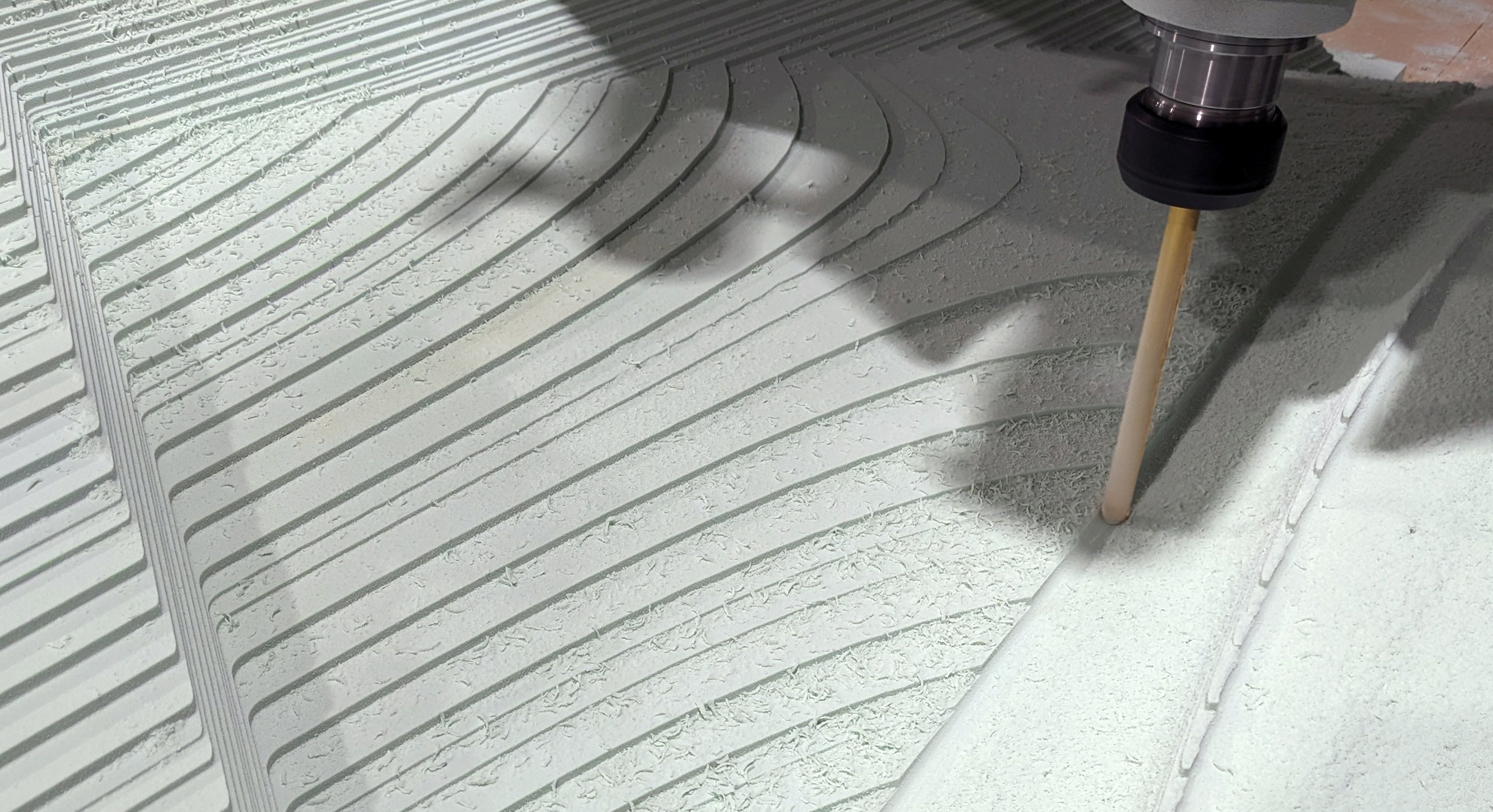
Modern digital fabrication methods make it possible to translate complex digital designs into molds used for casting custom concrete components. Curves, geometric reliefs, repeating patterns, dimensional surfaces, and sculptural forms can all become possibilities.
Through 3D Fabrication, Concreteworks East uses technologies and processes including 3D modeling, CNC milling, and mold building to support complex custom concrete designs.
For civic architecture, these capabilities can help turn functional elements into defining features of a public space.
Long-Term Durability for Public Environments
Public infrastructure is expected to remain functional for years while experiencing conditions that can quickly expose weaknesses in less durable materials.
Concrete’s inherent durability makes it well suited for outdoor and high-traffic environments. Depending on the application and design, properly fabricated concrete elements can withstand moisture, changing temperatures, sunlight, and frequent public use.
This longevity is particularly important when specifying materials for municipal projects, where maintenance and replacement can disrupt public access and create additional long-term costs.
Durability does not eliminate the need for proper care. Cleaning practices, sealers, environmental conditions, and the specific application can all influence long-term appearance and performance.
Maintenance Considerations for Municipal Concrete
Maintenance should be considered during design rather than after installation.
The location of an element, expected pedestrian activity, weather exposure, finish, color, and potential for staining can all influence the appropriate concrete specification.
Public-facing installations may require periodic cleaning, while certain surfaces may benefit from appropriate sealers or protective treatments. Selecting the correct finish from the beginning can help balance appearance with the realities of the environment.
This is another reason custom fabrication can be valuable. Instead of selecting a material based solely on appearance, architects can consider how its color, texture, and finish will perform within the specific application.
Creating a Consistent Architectural Language
Perhaps the greatest design advantage of architectural concrete for municipal buildings is its ability to connect many different parts of a project.
Consider a civic building surrounded by a public plaza. Concrete could appear across:
- Exterior wall panels
- Interior feature walls
- Public seating
- Planters
- Landscape walls
- Coping
- Steps
- Pedestrian features
- Custom sculptural elements
These components do not have to look identical. Instead, architects can use related colors, textures, proportions, and forms to establish a recognizable design vocabulary throughout the property.
That continuity can help a public space feel intentionally designed from the building facade to the landscape surrounding it.
Designing Municipal and Public Spaces with Concreteworks East
Successful civic architecture requires materials that support both immediate design goals and long-term performance. Precast concrete provides architects, landscape architects, contractors, and municipalities with a flexible platform for creating durable, functional, and visually distinctive public environments.
From precast concrete wall panels and architectural facades to seating, planters, coping, and other concrete landscape elements, custom fabrication allows concrete to serve as much more than a structural material.
Concreteworks East works with design and construction professionals to turn architectural concepts into custom concrete elements for commercial and public-facing environments.
Bring Your Public-Space Design to Life
Planning a municipal building, public plaza, pedestrian environment, or other civic project? Concreteworks East can help develop custom architectural concrete solutions around the design, performance, and fabrication requirements of your project.
Contact Concreteworks East to discuss your plans and explore what is possible with custom precast and architectural concrete.
Frequently Asked Questions About Precast Concrete for Public Spaces
What is precast concrete?
Precast concrete is concrete that is formed and cured away from its final installation location before being transported to the project site. Controlled fabrication allows components to be produced to specific dimensions, finishes, and design requirements.
Why is precast concrete used for municipal buildings?
Precast concrete offers durability, customization, controlled fabrication, and a wide range of architectural possibilities. It can be used for building facades, wall panels, interior features, landscape elements, and other municipal applications.
What concrete features can be used in public spaces?
Common applications include concrete benches, planters, walls, coping, steps, architectural panels, cladding, seating areas, and custom sculptural or landscape elements.
Can precast concrete be customized for architectural projects?
Yes. Architectural precast concrete can be customized by size, shape, color, texture, pattern, and finish. Advanced mold-making and digital fabrication can also enable complex geometric and three-dimensional designs.
Is precast concrete suitable for outdoor public spaces?
Yes. Concrete is commonly used for outdoor architecture and landscape applications because of its durability and ability to withstand demanding environmental conditions. The appropriate mix, finish, sealing, installation, and maintenance should be selected according to the project’s climate and intended use.
Related Posts